info@grinp.cn
+86 18098908025
Follow Us:


2026
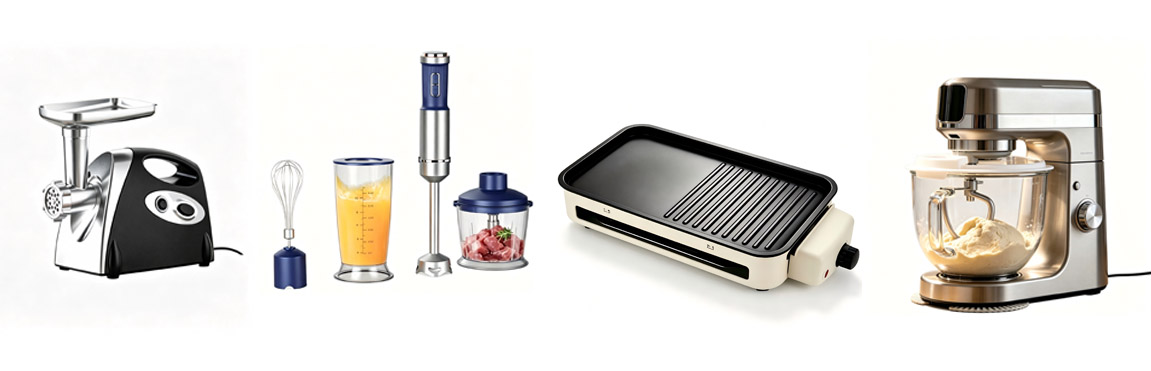
The global small home appliance market continues to maintain steady growth in 2026. As household consumption habits upgrade worldwide, compact,
energy-saving, and multi-functional small appliances are gradually becoming standard items for family life. Unlike the traditional large home appliance
market, small home appliances feature low entry barriers, diverse scenarios, and fast product iteration, bringing huge order opportunities for overseas
wholesalers, brand sellers, and cross-border e-commerce retailers.
However, the export track is also facing obvious changes. In recent years, market homogenization and price competition have become increasingly fierce.
Buyers in Europe, North America, Southeast Asia, and the Middle East are no longer simply pursuing low prices. Instead, they pay more attention to
product safety certification, stable quality, user experience, and sustainable after-sales support. This shift is reshaping the entire small home appliance
supply chain.
European and American markets focus on safety, energy efficiency, and minimalist design. Products must pass CE, RoHS, FCC, and other mandatory
certifications. Intelligent functions, low noise, and energy-saving performance have become core evaluation standards for large buyers.
Southeast Asian, Middle Eastern, and South American markets prioritize cost performance and practicality. Basic functional models with stable quality
and competitive prices remain mainstream. Meanwhile, portable small home appliances are growing rapidly due to the rising young consumer group.
In cross-border trade, product qualification has become the first factor affecting order cooperation. Many overseas buyers reduce cooperation with
unstable factories because of high defective rates, inconsistent batch quality, and certification failures.
Modern international procurement tends to choose manufacturers with standardized production lines, complete testing processes, and mature quality
control systems. Stable quality can effectively reduce after-sales risks, return rates, and brand losses for overseas sellers.
Global consumer demand is moving toward lightweight, space-saving, and multi-scene usable small home appliances. Single-function products are
gradually losing market competitiveness. Multi-functional, compact, and intelligent upgraded models are more favored by end consumers and have
higher repurchase rates.
At the same time, customized appearance, private molds, and personalized packaging have become important ways for overseas brands to achieve
market differentiation, making ODM services increasingly popular in the export industry.
Overseas customers now require both bulk stable supply and small-batch trial orders. Fast sample making, short lead times, and flexible customization
capabilities have become key advantages for excellent exporting manufacturers.
Factories that can quickly respond to market trends, launch new products, and support personalized adjustments are more likely to establish long-term
cooperative relationships with global importers and cross-border sellers.
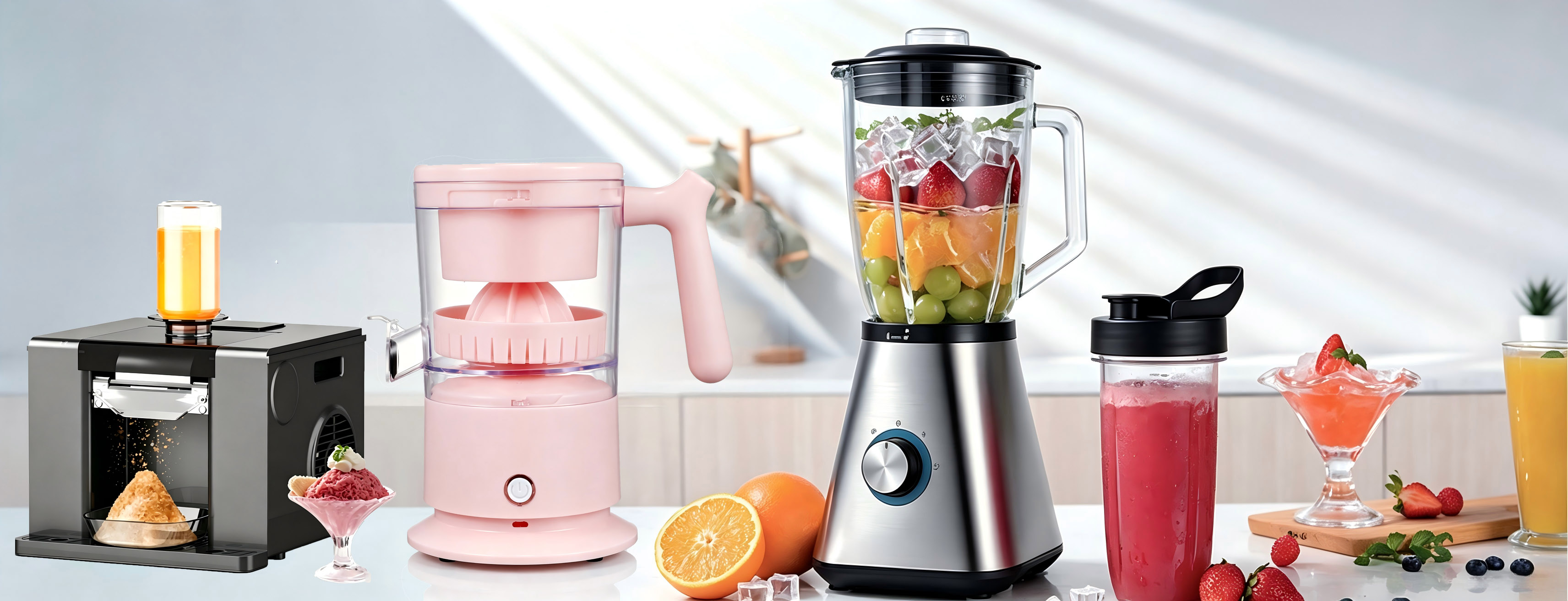
The small home appliance export industry is gradually stepping out of the low-price competition era. In 2026 and the future, product compliance, quality
stability, innovative design, and flexible supply capacity will be the core competitiveness of export manufacturers.
Only by continuously optimizing product strength and supply chain service capabilities can suppliers adapt to the increasingly stringent global market
requirements and create stable win-win cooperation with global buyers.